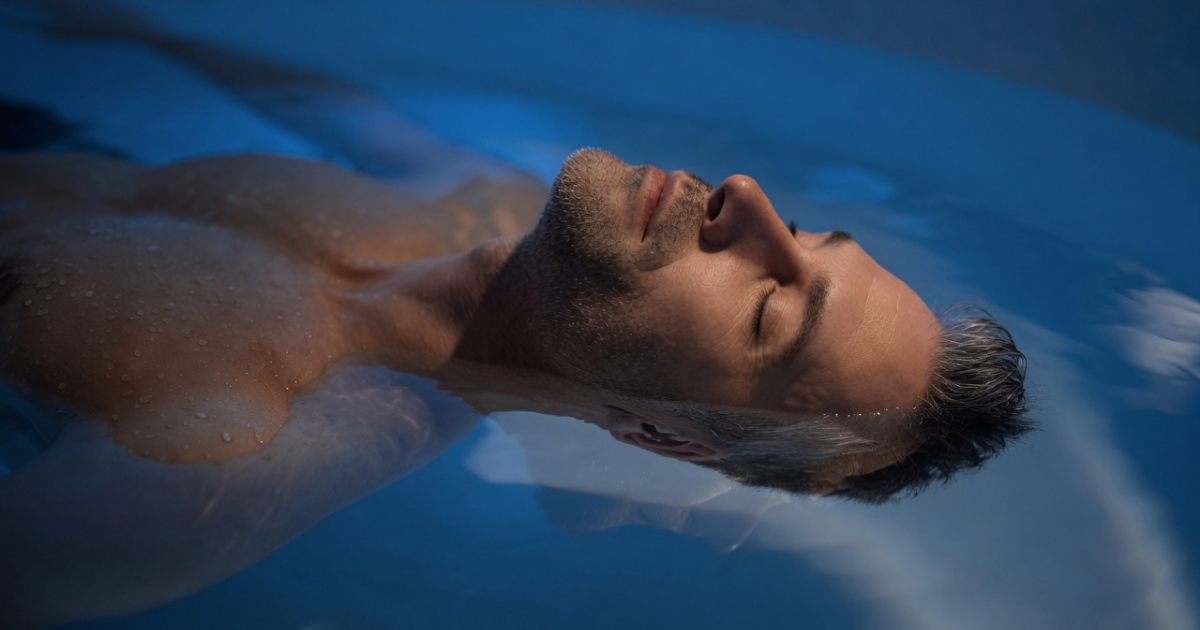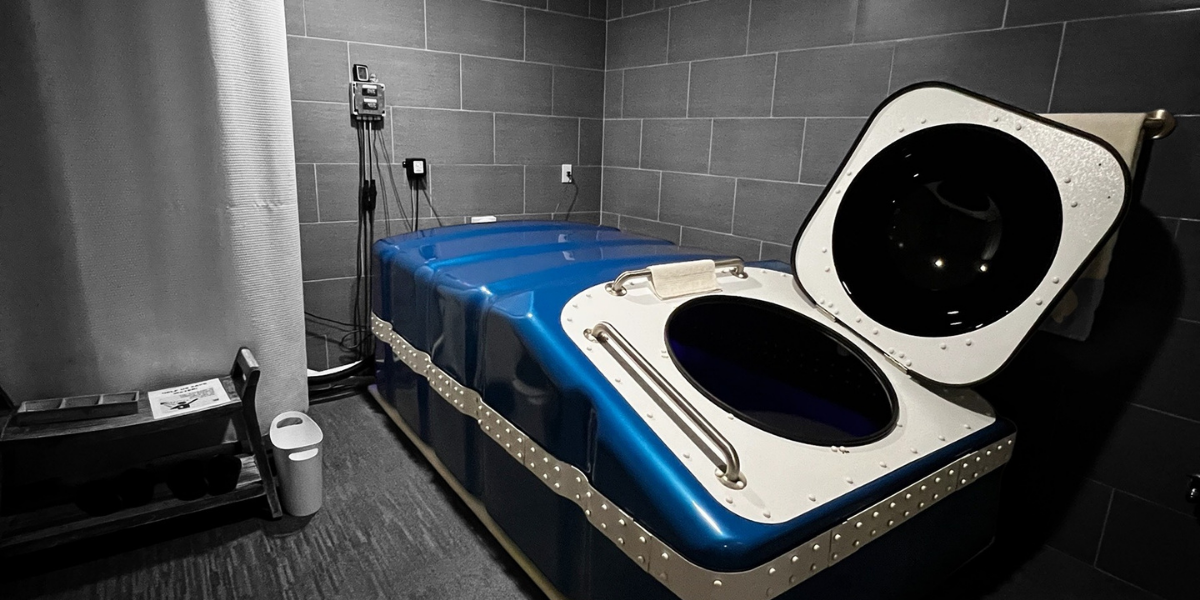
Back pain is one of the most common reasons people search for float therapy for back pain in Lincoln NE — and one of the areas where many guests tell us they feel the most immediate, felt-in-the-body response. Because what a flotation tank offers a spine in pain is something it rarely gets: a break from gravity.
For 60 minutes, your spine bears almost no load. Research suggests unloading may help discs regain some fluid. Bracing muscles can finally release — not the partial release of lying on a mattress, where your body still presses against a surface, but the complete release of weightlessness. No position to hold. Nothing to fight against.
We've had members experience things in the tank they hadn't felt in years. One man managing severe chronic back pain cried during his first float because he was finally able to lie completely flat on his back. That's what zero gravity actually means for a body that has forgotten what pain-free feels like.
This guide is for anyone with back pain considering a flotation tank in Lincoln, Nebraska — first-timers especially. We'll cover how it works, what different pain types can realistically expect, what the research actually shows (including its honest limitations), how to prepare, and when to check with your doctor first.
How Float Therapy Works for Back Pain
The spine wasn't designed for the sustained vertical loading modern life puts on it. Sitting compresses discs. Standing compresses them differently. Even lying on a mattress leaves residual pressure. There is almost no position in daily life where your spine is completely unloaded — except floating in a tank with 1,300+ pounds of dissolved Epsom salt, where the water density supports your body effortlessly at the surface.
1. Gravitational decompression: Intervertebral discs are largely water and tend to regain fluid during periods of rest and unloading. Sustained spinal compression — the default condition of most waking hours — gradually squeezes fluid from discs, reducing their height and shock-absorbing capacity. Float therapy offers about as complete a spinal unloading as you can get on Earth. Research on spinal height changes after sustained unloading suggests discs may regain some fluid during extended gravity-free positioning.
2. Paraspinal muscle release: The deep muscles running alongside the spine are among the most chronically overactivated muscles in people with lower back pain. They contract to protect and stabilize a painful structure — and that contraction often persists even at rest, contributing to the pain cycle itself. In a float tank, removing gravitational load removes the primary stimulus for that protective contraction. Many people feel these muscles release fully for the first time in months.
3. Central nervous system reset: Chronic pain is partly a nervous system problem. Central sensitization — where the brain amplifies pain signals beyond what the underlying tissue damage would predict — develops with ongoing pain and lowers the overall pain threshold. Float therapy promotes deep parasympathetic (rest-and-repair) activation, and emerging research is exploring whether that may help calm this sensitization pattern. West Virginia University's Rockefeller Neuroscience Institute has conducted a randomized trial examining float REST specifically for the autonomic stress response in chronic lower back pain (NCT05260918), studying whether reducing the chronic stress load changes how the brain processes lumbar pain signals. The trial is complete; findings have not yet been published.
Different Types of Back Pain — What to Expect
What the Research Actually Shows
The most rigorous float therapy pain study to date is the Float4Pain randomized controlled trial (Loose et al., JAMA Network Open, 2021; doi:10.1001/jamanetworkopen.2021.9627). In 99 chronic pain patients, five float sessions were associated with significant short-term reductions in pain intensity, pain area, and anxiety. Long-term benefit after stopping wasn't sustained — which tells us less about whether floating works and more about the importance of consistency.
Short-term: consistent positive findings. Short-term pain relief, anxiety reduction, and deep relaxation have been reported across multiple studies.
Long-term: frequency matters. Five sessions and stopping doesn't maintain benefit in the study setting — the same conclusion you'd reach about most exercise or manual therapy. That said, many people find that a good baseline established through regular floating holds up well between sessions, and some continue to feel relief long after stopping — until a reinjury or flare brings them back. Ongoing regular practice is where the most consistent long-term improvement appears.
More research is in progress. West Virginia University's Rockefeller Neuroscience Institute completed a randomized trial on float REST specifically for chronic lower back pain and the autonomic nervous system stress response (NCT05260918). The trial is complete but findings have not yet been published. A 2025 systematic review (Lashgari et al., BMC Complement Med Ther) of 63 float REST studies found pain was the single largest research category, with consistent acute benefit across dedicated pain studies.
What Members Actually Report
Research captures group averages. What we hear from members floating specifically for back pain captures something more personal.
"He hadn't been able to lie flat on his back in years. In the float tank, the weight just disappeared. He cried. That's what zero gravity actually means for someone living with that kind of pain."
This kind of response isn't always as pronounced right away — but it reflects a consistent pattern. Members with back pain commonly describe:
- Feeling taller and more open in the lower back immediately after the session
- The longest stretch of time pain-free they've experienced in months or years
- Reduced muscle tension that persists for several hours after floating
- Noticeably better sleep on float nights — less pain means less nighttime disruption
- A gradual improvement in baseline pain over weeks of consistent sessions
"For me, this place is a must and I love it — my old body looks forward to every visit and my ADHD mind craves the release."
Safety & When to Check with Your Doctor First
For most people with back pain, float therapy is gentle, low-risk, and well-tolerated. There are no movements to perform, no positions to hold, and no impact. That said, there are situations where it's worth checking with your healthcare provider before your first session.
Consult your provider before floating if you have:
- An acute back injury in the first few days — fresh injuries involving significant inflammation or instability may need brief rest before water immersion is appropriate
- A recent spinal surgery — in the post-operative period, check with your surgeon before any immersion. Once you're well healed, ask your surgeon whether floating is a good fit for you
- Open wounds or skin infections — the Epsom salt will sting, and water immersion isn't advised with broken skin
- Uncontrolled high blood pressure or recent cardiovascular events — relevant for any new wellness activity
- Pregnancy — floating during pregnancy is generally considered safe for many women, but check with your OB or midwife first, particularly in the first trimester
- Severe claustrophobia — worth a conversation with us before booking; our suites are more spacious than most people expect and you're in full control of the environment
When to keep floating and simply inform us: Many regular members at Lost in Float float comfortably with fused vertebrae, surgical hardware, herniated discs, or sciatica (with their provider's OK). Mention your situation when you book — we can discuss positioning options including the neck pillow and help you set realistic expectations for your first session.
Important: Float therapy is a complementary wellness practice, not a medical treatment. It is not a substitute for diagnosis, physical therapy, or medical care. If you have a back condition managed by a healthcare provider, continue that care and discuss float therapy as a potential addition — not a replacement. If you're experiencing new, severe, or worsening back pain, consult your doctor before starting any new wellness practice.
How to Prepare & Get the Most from Your Session
A few things make a meaningful difference for people floating for back pain specifically:
Before your session
- Know that a neck pillow is available if you need it. Most people find their neck settles naturally once they relax into the water — floating is surprisingly comfortable once you stop bracing. But if you find you can't fully let go of neck tension in your first session, just ask. The pillow sits at the waterline and removes the weight of your head completely. It's there if you need it, not something you have to use.
- Eat lightly and hydrate. You don't want to go in hungry — low blood sugar makes it harder to relax and settle. But a heavy meal right before makes lying still uncomfortable. A light snack or small meal 60–90 minutes before is the sweet spot. Same with water — come hydrated but not overfull.
- Consider a sauna round first. Many back pain members do a 15-minute round in our 195°F sauna before floating. Many find the heat helps their back muscles start to relax before they get in the tank.
During your session
- Allow 15–20 minutes to settle. If you arrive in pain and keyed-up, the first part of the session won't feel immediately relaxing. Stay with it — it almost always settles. The nervous system needs time to receive the signal that it's safe to let go.
- You can leave at any time. The lid opens from inside and the light is yours to control. Knowing you can leave tends to make staying much easier.
- Experiment with arm position. Many people find arms extended overhead creates the most open, decompressed lumbar feeling. Try it.
After your session
- Move gently. A short slow walk is ideal. Avoid jumping back into strenuous activity, which quickly re-engages the bracing patterns the float just released.
- Protect the window. The 2–4 hours after a float are often the most pain-free and calm of the week. Plan accordingly.
- Note your response. A simple before/after pain score helps you understand your pattern and decide on session frequency.
Pairing Float Therapy with Other Services for Back Pain
Float therapy works well on its own. Many members also pair it with other services at Lost in Float that support comfort from complementary angles:
- Traditional sauna at 195°F — Heat increases blood flow and many people find it relaxes tight back muscles. A 15-minute sauna round before floating is a favorite warm-up. Many members with back pain do sauna-then-float as their standard protocol.
- Red light therapy — Our full-body bed offers 10 wavelengths (415–980nm), targeted to your goal; research suggests near-infrared light may reach muscle and joint tissue and support mitochondrial function. Emerging research on red light and inflammation makes it a popular complement to floating. $49, about 15 minutes.
- Fire & Ice (Sauna + Cold Plunge) — Our 45°F cold plunge is available inside Fire & Ice (45 min $49 / 60 min $59) or the Immersion Room with a hot plunge (20 min $25 / 45 min $49). Research on cold water immersion and soreness is emerging, and many guests like how they feel afterward. Best timed separately from the float rather than immediately after.
Give your back 60 minutes of zero gravity
Float therapy at Lost in Float — two private suites, 60-minute floats, $75, neck pillows available, Lincoln NE. Open Tuesday–Sunday 9am–9pm.
Book a session → See membershipsFrequently Asked Questions
The Bottom Line
Float therapy won't fix structural back problems — it won't repair a herniated disc or resolve the underlying cause of sciatica. What it can do is give an overloaded spine an hour of rest, let bracing muscles release, and give a stressed nervous system a chance to calm down.
If you've been managing back pain for a while and haven't tried floating, it's worth trying. Come in and give yourself 60 minutes. Most people who try it for back pain come back — and most say they wish they'd found it sooner.
Lost in Float is at 8244 Northern Lights Dr, Lincoln NE. Open Tuesday–Sunday 9am–9pm. Call or text 531.289.7739 with any questions about whether floating is right for your specific situation.
Loose LF, Manuel J, Karst M, Schmidt LK, Beissner F. (2021) — Flotation restricted environmental stimulation therapy for chronic pain: a randomized clinical trial. JAMA Network Open. doi:10.1001/jamanetworkopen.2021.9627. Significant acute pain, anxiety, and area reductions; five-session protocol did not produce sustained long-term benefit.
West Virginia University Rockefeller Neuroscience Institute (NCT05260918) — Float-REST for recovery in individuals with chronic lower back pain: autonomic nervous system stress response. Randomized trial, completed. Findings not yet published.
Lashgari E, Chen E, Gregory J, Maoz U. (2025) — A systematic review of flotation-restricted environmental stimulation therapy (REST). BMC Complement Med Ther. doi:10.1186/s12906-025-04973-0. Pain was the largest research category across 63 studies (~1,800 participants); consistent findings of acute pain reduction, anxiety reduction, and improved relaxation.
Kjellgren A, Sundequist U, Norlander T, Archer T. (2001) — Effects of flotation-REST on muscle tension pain. Pain Research & Management. Significant reductions in pain, anxiety, and depression documented with regular float sessions over multiple weeks.