If you've spent any time researching HBOT in the last few years, you've almost certainly encountered the Israeli research — and the headlines that followed. "Scientists Reverse Aging Process in Human Cells." "HBOT Lengthens Telomeres by 38%." "The Holy Grail of Anti-Aging." The study out of Tel Aviv University and Shamir Medical Center landed like a depth charge in the wellness world — and at Lost in Float, offering hyperbaric oxygen therapy at four settings from 1.3 to 2.0 ATA, we've been following it closely. Its central finding has fueled a widespread belief: 2.0 ATA is where the real magic happens.
That belief isn't wrong — but it's incomplete. And because it's incomplete, a lot of people are walking away from HBOT conversations thinking that anything below 2.0 ATA is a compromise. That's not what the research shows.
At Lost in Float, we offer 2.0 ATA HBOT — and we're genuinely excited about it. But everyone starts at 1.3 ATA. It takes time for the body to adjust to pressurization, and that adjustment shouldn't be rushed. Beyond that, emerging research suggests 1.3 ATA has its own distinct effects that aren't simply a watered-down version of 2.0. This post explains both.
Educational purposes only. This content focuses on general wellness applications of HBOT. We do not diagnose, treat, or claim to cure any medical condition. Results vary. Consult your healthcare provider for personalized guidance.
The bottom line up front: The Israeli research is real and the findings at 2.0 ATA are genuinely exciting. Everyone at Lost in Float starts at 1.3 ATA — because adjustment to pressure takes time and shouldn't be rushed, and because emerging research suggests 1.3 may have its own distinct effects on inflammation markers, cognition, and recovery. 1.6, 1.8 and 2.0 ATA are available for those who progress there. Both are valuable. Neither is a compromise.
Individual results vary. HBOT at Lost in Float is offered strictly as a wellness and recovery modality. We do not diagnose, treat, or cure any medical conditions.
The Israeli Research — Why Everyone Is Talking About 2.0 ATA
In November 2020, Professor Shai Efrati and his team at Tel Aviv University and the Shamir Medical Center published a study that genuinely stopped people in their tracks. It remains one of the most cited and most discussed HBOT studies ever published — and for good reason.
What they did: 35 healthy adults aged 64 and older received 60 daily HBOT sessions at 2.0 ATA with 100% oxygen, with air breaks during each session to exploit the hyperoxic-hypoxic paradox. Blood samples were collected at baseline, session 30, session 60, and 1–2 weeks after the final session.
What they found: Telomere length in T helper, T cytotoxic, natural killer, and B cells increased significantly — by over 20% across cell types, with B cells showing the most dramatic change at 37.63%. Senescent T helper cells decreased by 37.30%. Professor Efrati called this the "holy grail" of biological aging research — the first human evidence that a non-pharmacological intervention could actually lengthen telomeres rather than simply slow their shortening.
Why it spread: Telomere shortening is one of the nine recognized hallmarks of aging. Lifestyle interventions like exercise and diet modification can slow shortening — but reversing it, measurably, in 60 sessions, was a different category of finding. Business Insider, ScienceDaily, Neuroscience News, and outlets worldwide ran the story. The wellness world took the conclusion and ran: 2.0 ATA = the aging protocol.
What the Study Actually Showed — and Important Context
The findings are real and exciting. The 2020 Israeli study reported telomere lengthening and reduced senescent cells after 60 sessions at 2.0 ATA. However, as with most research, some important details are often missed in the headlines.
What the Study Showed
- Telomere lengthening was measured in blood cells after repeated HBOT — a striking early result
- The hyperoxic-hypoxic paradox (via air breaks) was the proposed mechanism
- A specific protocol was used — 60 sessions at 2.0 ATA with 100% oxygen
- Measured in blood cells — a meaningful biomarker even if not a full-body reading
Important Context
- Prospective trial (no control group) — promising but other factors could have influenced results
- Short-term follow-up — longer-term durability needs more research
- Conducted on 35 healthy adults aged 64+ — exciting starting point, with more studies needed for wider groups
None of this diminishes the significance of the findings. It's a landmark study that opened exciting possibilities for HBOT in longevity and recovery. It simply means we continue learning as more research emerges.
The reason HBOT affects telomeres and senescent cells isn't simply "more oxygen = more repair." The proposed mechanism is more elegant: researchers suggest repeated alternation between high oxygen (hyperoxia) and normal oxygen creates a controlled stress signal — similar to the adaptation response from exercise — that may encourage stem cell proliferation, angiogenesis, and senolytic activity (the clearance of malfunctioning cells). The air breaks in the Efrati protocol were deliberate. The paradox is that it may be the cycling, not sustained high oxygen, that drives the response. This mechanism can operate at lower pressures too — the question is magnitude.
What the Mainstream Coverage Missed — The 1.3 ATA Story
While everyone was talking about the Israeli findings at 2.0 ATA, a parallel body of research on mild pressure HBOT was quietly building a compelling case of its own. And then Dr. Jason Sonners, a well-known HBOT practitioner and educator, presented PhD research directly comparing the two pressure levels in healthy individuals. The findings (not yet published in a peer-reviewed journal) add a layer of nuance worth knowing.
The Sonners Research — What 1.3 and 2.0 ATA Actually Do Differently
The study: Three groups of healthy, non-diagnosed individuals — mild HBOT (1.3 ATA with 100% oxygen), higher pressure HBOT (2.0 ATA with 100% oxygen), and a control group. Measured outcomes: a broad panel of cytokines (inflammatory signaling molecules), cognitive performance, and epigenetic clocks (biological age markers via DNA methylation).
The cytokine finding: Both pressures were associated with lower levels of inflammatory signaling molecules — but they targeted different sets of cytokines. The mild group saw 21 cytokines significantly reduced; the high-pressure group saw 20. The overlap was real but incomplete. This suggests the two pressures aren't simply the same session at different intensities — they may involve partially distinct biological pathways.
The epigenetic / longevity finding: Both pressures were associated with shifts in biological age markers — but with different trajectories. 1.3 ATA showed steady, consistent improvements from the start, with strong early effects on Gen 1 epigenetic clocks and no regression phase. 2.0 ATA showed an initial temporary backward movement in some aging markers in the first approximately five weeks — possibly a hormetic adaptive stress response — before showing a stronger shift, particularly on Gen 2 clocks. On stem cell mobilization, 2.0 ATA showed approximately 8x increases versus approximately 3x at 1.3 ATA.
The implication: Choosing your pressure level is not simply choosing a dose. It's about which biological pathways to prioritize — and the research increasingly suggests that moving through the range over time, starting at 1.3 ATA and progressing toward 2.0 ATA, may engage more of the relevant mechanisms than staying at a single level.
What Research Suggests at 1.3 ATA — Not Just a Stepping Stone
1.3 ATA is where everyone at Lost in Float begins. It's also where some people will do the majority of their HBOT practice — and that's not a consolation prize. Emerging research at this pressure level is worth a look.
- Lower levels of 21 inflammatory cytokines in one unpublished comparative study (Sonners, 2024–2025)
- Steady epigenetic clock changes from the start in that same study — no initial regression phase
- Early shifts on Gen 1 epigenetic clocks
- May support cognitive wellness — an area of active research
- Many athletes use mild pressure as part of their recovery routine
- Enhanced oxygen availability with 95–97% O₂ by mask
- Gentlest pressure to adapt to — a comfortable fit for regular sessions
- Telomere lengthening (20–38% in key blood cells) reported in the Israeli study at 2.0 ATA
- Fewer senescent cells (up to 37%) reported in the same study
- Greater enhanced oxygen availability as pressure rises
- Greater stem cell mobilization (~8× vs ~3× at 1.3 ATA in Sonners' unpublished research)
- Lower levels of a different set of 20 cytokines in that research — complementary to 1.3 ATA
- Larger shifts on advanced epigenetic clocks (Gen 2) after initial adaptation in that research
- Of interest for longevity and recovery goals — research is still early
- Well-suited for those who tolerate and progress to higher pressure comfortably
Ready to experience HBOT in Lincoln NE? Book a 60-minute session for $85 →
Why Progressing Through the Pressures Makes Sense
For anyone exploring hyperbaric oxygen therapy, our approach is simple: build a solid foundation at 1.3 ATA, then step up through 1.6 and 1.8 to 2.0 ATA if you want to pursue longevity-focused sessions.
The most interesting insight from the Sonners research isn't that one pressure is better. It's that different pressure levels work through different pathways — which means progressing through the full 1.3 to 2.0 ATA range over time may engage more of the relevant biological mechanisms than staying at any single level.
In that research, 1.3 ATA was associated with lower levels of 21 cytokines and steady epigenetic clock changes from the start, with no initial regression phase. 2.0 ATA was associated with a different set of 20 cytokines and, after the body adapted, larger shifts on Gen 2 clocks and more stem cell mobilization. The overlap is real, but they're not doing identical things. A practice that moves through 1.3 ATA properly before incorporating 2.0 ATA is sequencing things in a way that makes physiological sense.
Starting at 1.3 ATA isn't just about safety or adaptation — it's about giving that pressure level its due before layering in higher settings. The progression, when it happens, builds on a foundation rather than skipping one.
"The body needs time to adapt to pressure — and that's not a limitation to work around, it's part of the process. 1.3 ATA is where that adaptation happens."
At 2.0 ATA, the Israeli research reported telomere lengthening and fewer senescent cells — some of the most talked-about findings in HBOT longevity research to date, though still early. After a foundation at 1.3 ATA, many guests choose to step up toward 2.0 ATA sessions.
How Lost in Float Approaches This
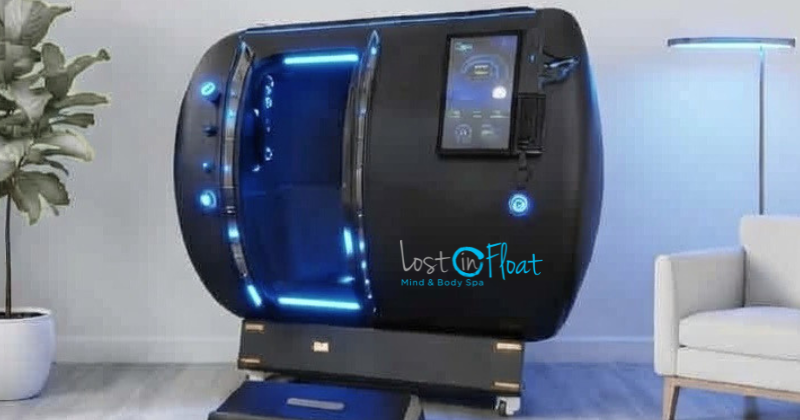
At Lost in Float, HBOT is open now in a hard-shell seated chamber with four settings — 1.3, 1.6, 1.8 and 2.0 ATA — and 95–97% oxygen delivered by mask. Sessions are 60 minutes, with AC, a TV and a grounding mat. Everyone starts at 1.3 ATA and progresses based on their individual response and goals.
Everyone starts at 1.3 ATA — and there's good reason for that beyond just caution. Adjusting to a pressurized environment takes time. Equalization, the sensations of pressurization, and how your body responds to increased oxygen all need to be established gradually. Rushing that process doesn't produce better results — it just skips the foundation. Beyond the adaptation curve, emerging research suggests 1.3 ATA may have its own distinct effects. Starting at 1.3 isn't just waiting to get to something better.
As your body adapts and we understand how you respond, 1.6, 1.8 and 2.0 ATA become available for those who want to move toward the protocol the Israeli research used. That progression happens at a pace that makes physiological sense — not rushed, not arbitrary. And for many people, 1.3 ATA will be where they do most or all of their sessions.
We offer HBOT as a wellness and recovery modality, not as medical treatment. We'll always be transparent about what we offer, what the research says, and what makes sense for your individual goals and response.
HBOT in Lincoln NE is now available at Lost in Float — $85 for a 60-minute session. All members get 50% off full-price HBOT, and Gold and Platinum members can also use membership credits toward HBOT. Ask us about HSA/FSA payment, and check with your plan administrator for eligibility.
HBOT — now open at Lost in Float
Hard-shell seated chamber · 1.3 / 1.6 / 1.8 / 2.0 ATA · 95–97% oxygen by mask · 60 min $85 · All members: 50% off full-price HBOT · Gold & Platinum: use membership credits · 8244 Northern Lights Dr
Book HBOT → Read the full HBOT guide →Frequently Asked Questions
Studies Referenced
- Hachmo Y, Hadanny A, Abu Hamed R, et al. (2020). Hyperbaric oxygen therapy increases telomere length and decreases immunosenescence in isolated blood cells: a prospective trial. Aging (Albany NY).
- Hachmo Y, et al. (2021). The effect of hyperbaric oxygen therapy on the pathophysiology of skin aging. Aging (Albany NY).
- Hadanny A, Efrati S. (2020). The hyperoxic-hypoxic paradox. Biomolecules.
- Hadanny A, et al. (2020). Cognitive enhancement of healthy older adults using hyperbaric oxygen: a randomized controlled trial. Aging (Albany NY).
- Yan J, et al. (2023). Adverse effects of hyperbaric oxygen therapy: a systematic review and meta-analysis. Frontiers in Neurology.
- Sonners J. (2024–2025). Comparative study: physiological differences between 1.3 ATA and 2.0 ATA HBOT in healthy non-diagnosed individuals. PhD research, molecular biology / regenerative medicine. Findings presented at HBOT USA.
- Wolf EG, et al. (2012). Systematic review and dosage analysis: hyperbaric oxygen therapy efficacy in mild traumatic brain injury. Frontiers in Neurology.
Not medical advice. This guide is educational. It is not a substitute for advice from your healthcare provider. HBOT at Lost in Float is offered as a wellness and recovery modality, not as medical treatment for any condition. If you are managing a diagnosed medical condition, consult your doctor before beginning HBOT sessions.