Nobody wants to get in cold water.
That's the whole point.
The moment you step into a 45°F cold plunge and your body screams at you to get out — and you stay anyway — something changes. Not just physically. Mentally. You've just done the hardest thing you'll do all day before 10am, and your brain knows it.
But the benefits go far deeper than willpower training. The research on cold water immersion is genuinely interesting — and it's part of why athletes, executives, and everyday people in Lincoln NE are making the cold plunge a non-negotiable part of their week.
What Happens in the First 30 Seconds
When your body hits cold water, several things happen simultaneously:
Vasoconstriction — your blood vessels narrow, pushing blood toward your vital organs. This is your body protecting itself.
Norepinephrine surge — this neurotransmitter (responsible for focus, mood, and energy) rises sharply. Research suggests norepinephrine can increase by 200-300% during brief cold exposure.
Dopamine increase — a study published in the European Journal of Applied Physiology (Šrámek et al., 2000) found that an hour of immersion in 57°F water raised dopamine by about 250%, with levels staying elevated after the session.
"That post-plunge feeling of being electric, alive, and unstoppable? It isn't just in your head — there's real neurochemistry behind it."
The Recovery Science
For anyone who trains — whether you're a competitive athlete or just someone who hits the gym regularly — cold water immersion is one of the most studied recovery tools out there.
Reduced muscle soreness. Cold immersion constricts blood vessels and decreases metabolic activity, which may reduce swelling after intense exercise. Multiple studies suggest reductions in DOMS (delayed onset muscle soreness) with regular cold water immersion.
Circulation on the rebound. When you exit the cold water, vasodilation sends blood back to your muscles — one reason many people feel refreshed afterward. (If you're training for muscle size, time your plunge a few hours away from lifting — see how long to cold plunge.)
Inflammation support. Research suggests cold immersion may help lower some markers of exercise-related inflammation.
Improved sleep. Some research suggests cold exposure earlier in the day may support sleep quality, possibly by helping the natural drop in core body temperature that comes before sleep. Many guests tell us they sleep better on plunge days.
45°F — Why Temperature Matters
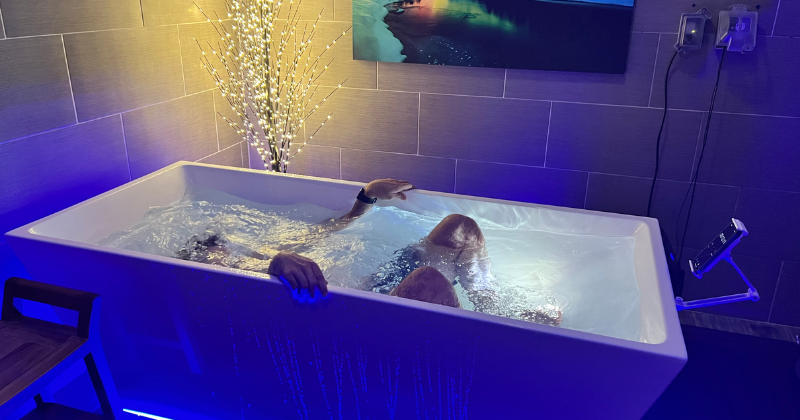
At Lost in Float in Lincoln NE, our cold plunge runs at 45°F — genuinely cold, and that matters.
Research suggests colder water produces a faster, stronger norepinephrine and dopamine response. The discomfort is greater — and so is the response.
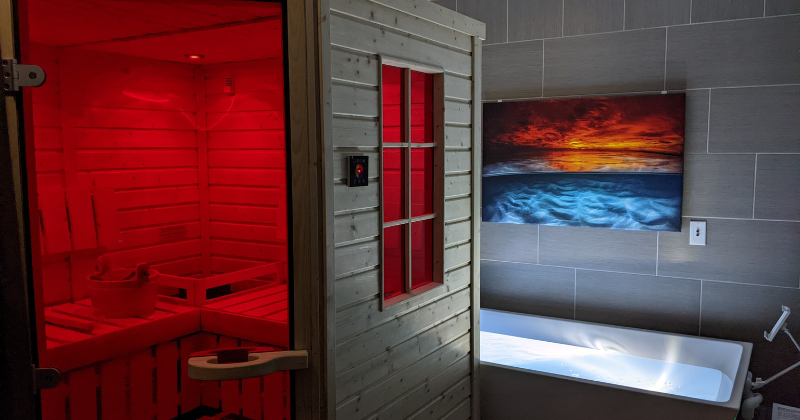
Our cold plunge lives in two private rooms: Fire & Ice (Sauna + Cold Plunge) — 45 min $49 / 60 min $59, +$25 to bring a friend — and the Immersion Room (hot plunge + cold plunge) — 20 min $25 / 45 min $49.
The Mental Game
Here's what nobody tells you about cold plunging: it's as much a mental practice as a physical one.
When you're in the water and every instinct is telling you to get out, the choice to stay — calm, breathing, present — trains your nervous system to regulate under stress. That regulation transfers to your daily life.
Over time, many cold plungers tell us they feel more resilient to stress, calmer under pressure, and generally harder to rattle. (If you're managing anxiety or any health condition, talk to your doctor before starting — cold plunging is a wellness practice, not a treatment.)
Cold shock proteins — particularly RBM3 — activate after cold water immersion. Emerging research, mostly in animals so far, suggests they may support synapse health and cellular resilience. It's one of the more interesting and underreported areas of cold research.
How to Start
First session: 1-2 minutes. Focus on your breathing. Keep it slow and controlled. Don't fight the cold — breathe through it.
After a few sessions: Work toward 1-3 minutes per dip, building to about 11 minutes a week. More isn't better — consistency is. For the full breakdown, see How Long Should You Cold Plunge?
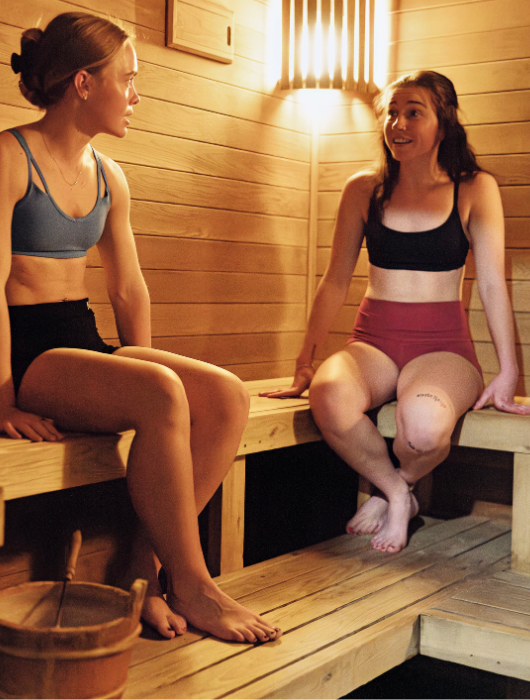
Want heat too? Pair the cold plunge with sauna in Fire & Ice (Sauna + Cold Plunge). Many guests tell us alternating heat and cold is their favorite way to recover. Prefer warm water? The Immersion Room pairs a hot plunge with the cold.
Ready to take the plunge?
Immersion Room (hot + cold plunge) 20 min $25 / 45 min $49. Fire & Ice (Sauna + Cold Plunge) 45 min $49 / 60 min $59 — add a friend for $25.
Book Fire & Ice or the Immersion Room → See membershipsThe Bottom Line
Cold plunging is not punishment. It's not a trend. It's one of the most studied recovery practices out there — and in Lincoln NE, you can try it from $25 in the private Immersion Room, or pair it with sauna in Fire & Ice (Sauna + Cold Plunge), at Lost in Float.
The hardest part is stepping in. Everything after that is just breathing.
Lost in Float is located at 8244 Northern Lights Dr, Lincoln NE. Open Tuesday–Sunday 9am–9pm. Call or text 531.289.7739.