Home›Blog›Recovery
Athletic Recovery · Lincoln NE

Sports Recovery in Lincoln NE: The Athlete's Multi-Service Recovery Plan

CrossFit, Hyrox, running and endurance, MMA and BJJ, strength and lifting — here's the multi-service recovery stack Lincoln's most serious athletes are building, and the science behind why each piece matters.

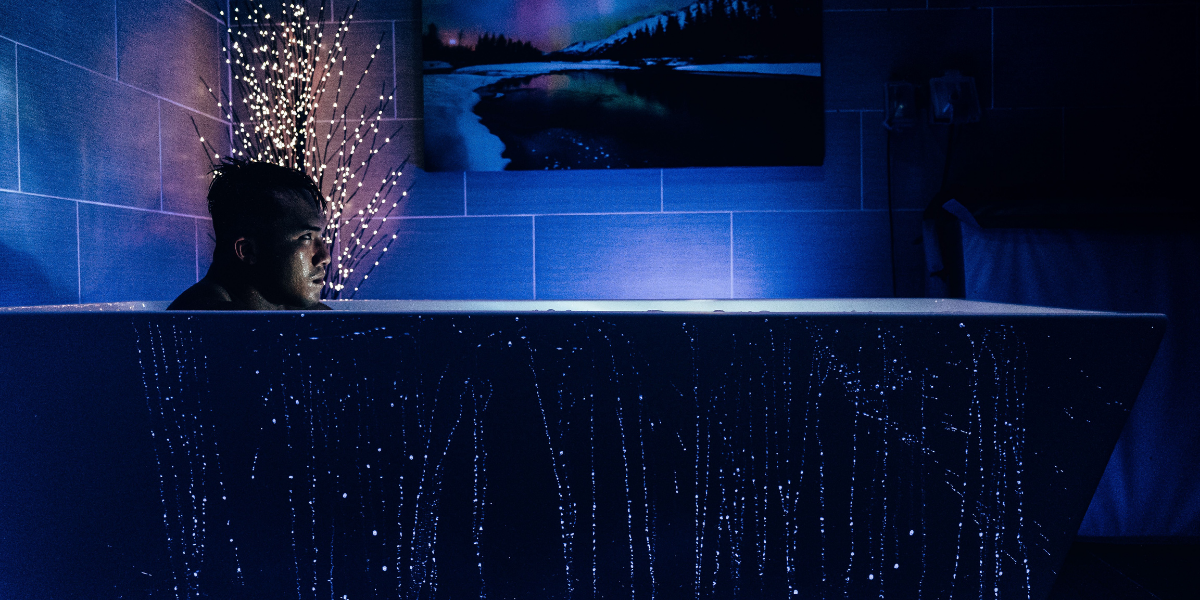
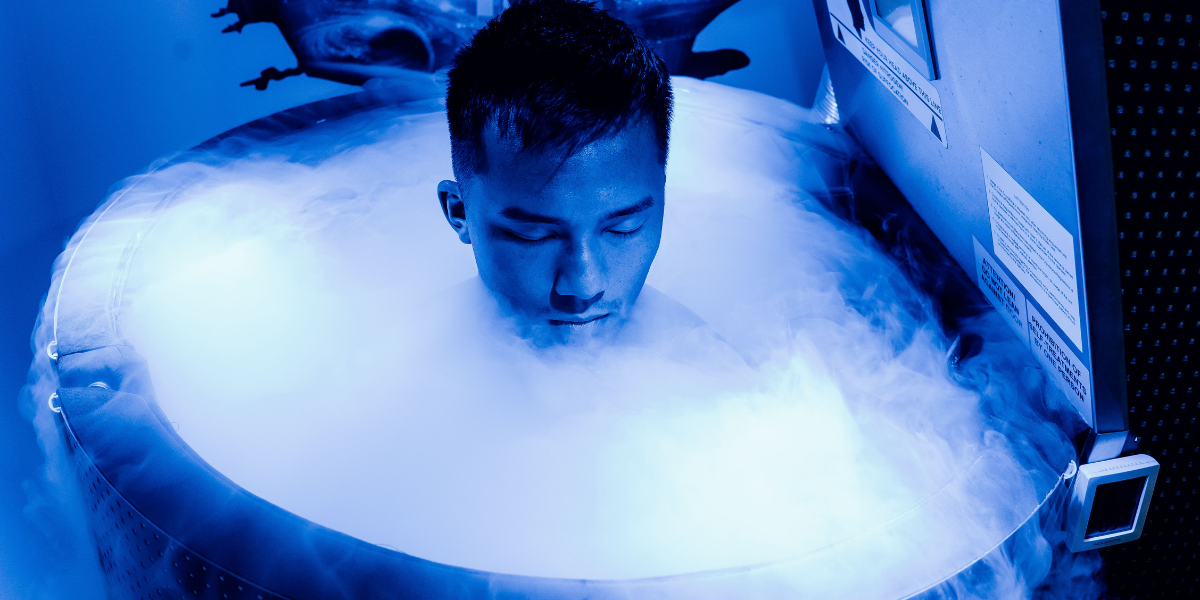
Athlete using whole body cryotherapy for recovery at Lost in Float in Lincoln NE
Cryotherapy for post-training recovery at Lost in Float — eight services under one roof · 8244 Northern Lights Dr

Lincoln has a serious athletic community. If you're searching for sports recovery, post-workout recovery, or a real muscle-recovery routine in Lincoln NE, you're after the same edge everyone training hard wants. CrossFit and Hyrox, competitive running and endurance racing, Brazilian jiu-jitsu and MMA, powerlifting and Olympic lifting — there's no shortage of people training hard, competing seriously, and looking for every legitimate way to recover faster and perform better the next day, week, and year.

What we've built at Lost in Float is eight services under one roof. Not one modality, not two — the services athletes ask us about most for recovery, with top-of-the-line equipment, with a membership structure designed for people who actually use them regularly. And with hyperbaric oxygen therapy (HBOT) in the lineup, the stack is more complete than ever. (New to recovery in Lincoln? Start with our complete Lincoln wellness & recovery guide for the full rundown on every modality.)

Here's how the plan works, who it's for, and why each piece matters.

Sports Recovery in Lincoln NE: The Complete Athlete Stack

Recovery shouldn't mean driving across town for each tool. At Lost in Float, eight services live under one roof — cold plunge (inside Fire & Ice (Sauna + Cold Plunge) or the Immersion Room), float therapy, sauna, red light, HBOT, cryotherapy, and Tonal strength — so your whole post-workout and muscle-recovery routine happens in one visit instead of five. That's the difference between collecting sessions and building an actual recovery practice.

The Recovery Problem Every Serious Athlete Faces

Training makes you better by breaking you down. The adaptation happens during recovery, not during the session. The athletes who recover fastest aren't just more talented — they're recovering more completely between sessions, which means they can train harder, more often, with better quality, and with fewer injuries over a longer career.

Recovery has four distinct problems that each require different solutions:

No single modality addresses all four. The stack is designed to cover them together — and Tonal adds the strength side, with lighter, guided options for days you're too sore to train hard.

By Sport: What Works Best
🎽
Hyrox & Functional Fitness
Fire & Ice · Float · Red Light · HBOT
Hyrox and functional-fitness racing combine high-volume running with heavy functional stations — a brutal mix of metabolic and muscular fatigue. Cold plunge may help manage the soreness that stacks up across a hard training block. Sauna builds heat tolerance and cardiovascular adaptation that may carry over to race performance. Float helps the nervous system downshift between sessions, and red light plus HBOT (enhanced oxygen availability) may support recovery so you can train the volume Hyrox demands without breaking down.
🏋️
CrossFit Athletes
Tonal · Float · Red Light · Fire & Ice · HBOT
High-intensity, multi-modal demands. Tonal strength training — free daily for members — includes an Active Recovery mode and Muscle Readiness feature that let you keep training through soreness at reduced load and target the muscle groups that are actually fresh. Float therapy's nervous system reset after metcons. Red light may support recovery for tissue stressed by heavy lifting. Cold plunge timing note: plunge before you lift (our recommended order is Cold Plunge → Tonal → Sauna → Red Light), not right after heavy strength work. Sauna post-workout for relaxation and recovery. HBOT is the optional advanced layer for deeper recovery support through enhanced oxygen availability.
🏃
Runners, Triathletes & Endurance
Float · Fire & Ice · Red Light · HBOT
High-mileage running creates repetitive tissue stress, joint loading, and chronic sympathetic nervous system activation. Float therapy takes load off the spine and joints while the nervous system downshifts. Research suggests cold water immersion may reduce DOMS after a long run. Sauna may support cardiovascular adaptation and plasma volume expansion — benefits endurance athletes care about. HBOT rounds out the stack as an advanced recovery layer through enhanced oxygen availability.
🥋
MMA, BJJ & Combat Sports
Float · Fire & Ice · Red Light · HBOT
Grappling and striking sports create significant neural fatigue, joint stress, and acute soft tissue damage. Float therapy is particularly well-suited: zero-gravity decompression for joints and the spine, plus the mental reset that combat sport athletes cite as one of the most underestimated aspects of competition prep. Cold plunge (in Fire & Ice or the Immersion Room) between sparring sessions. Red light may support soft tissue recovery. HBOT is the advanced layer some combat athletes reach for during hard camps — enhanced oxygen availability to support overall recovery.
💪
Strength & Lifting
Cold Plunge · Tonal · Sauna · Red Light · HBOT
Powerlifting, Olympic lifting, and serious strength work load the joints, tendons, and central nervous system hard. Tonal's adaptive resistance and Muscle Readiness flag which groups are ready to load and let you scale down on sore days. Sauna post-lift for relaxation and recovery. Red light may support joint and connective tissue stressed by heavy loading. Timing note: plunge before you lift, not after — cold right after strength work can blunt the muscle-building signal you just worked for. HBOT is the advanced recovery layer for the heaviest training blocks.
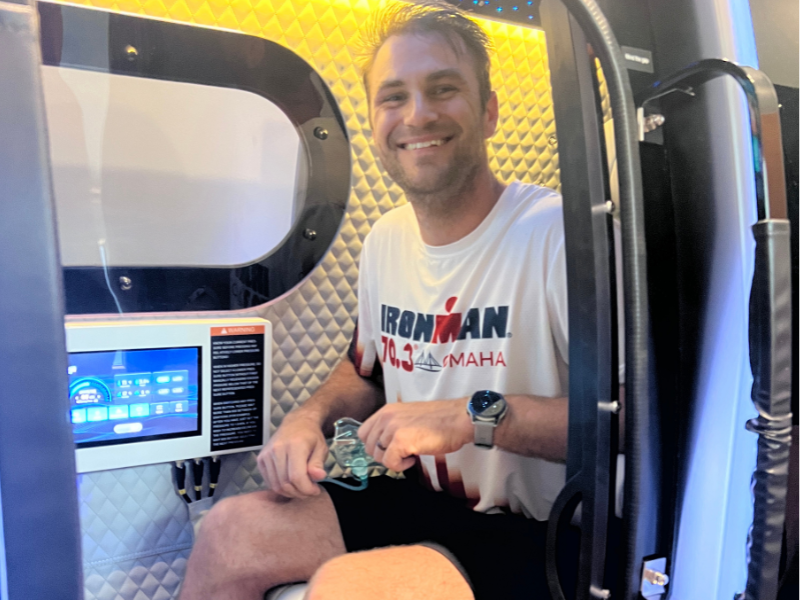
Ironman endurance athlete in a hyperbaric oxygen therapy (HBOT) chamber at Lost in Float in Lincoln NE
An endurance athlete during an HBOT session — the advanced oxygen layer in the recovery stack at Lost in Float in Lincoln NE.

The Full Recovery Stack

01
Float Therapy · 60 min · 2–4x/month
Nervous system reset and spinal decompression
Every serious athlete underestimates autonomic nervous system fatigue until they experience what float therapy does for it. Many athletes tell us a float produces a deeper sense of calm than anything else in their week, and some notice better HRV readings the next day. For combat sport athletes, this is where mental recovery from the emotional and cognitive demands of training happens. For high-volume athletes, it's a chance for the nervous system to downshift. The gravitational unloading is equally real — 60 minutes without loading the spine, joints, and connective tissue.
02
Cold Plunge at 45°F · 3–5 min · Before lifting, or after cardio · In Fire & Ice or the Immersion Room
Inflammation management and mental fortitude
Cold water immersion at 45°F is a serious thermal challenge — water conducts heat about 25x more efficiently than air, so our cold plunge feels very different from the dry cold of cryotherapy. The vasoconstriction and subsequent vasodilation may support circulation and recovery. The dopamine and norepinephrine spike (norepinephrine rises 2–3x in short plunges) is relevant beyond mood: these neurochemicals may support focus, lower pain sensitivity, and the mental resilience that separates serious competitors. Note: on lifting days, plunge before Tonal, not after — cold right after strength training may blunt the anabolic signal. Single cold plunge sessions aren't sold on their own; book Fire & Ice (Sauna + Cold Plunge, 45 min $49 / 60 min $59) or the Immersion Room (hot plunge + cold plunge, 20 min $25 / 45 min $49).
03
Sauna at 195°F · 2–3 rounds · 3–4x/week
Cardiovascular adaptation and growth hormone
Sauna is often underestimated as an athletic tool. At 195°F, the cardiovascular response mimics moderate aerobic work — cardiac output increases, blood vessels dilate, and the body adapts similarly to how it adapts to training. For endurance athletes, research suggests regular sauna use may support plasma volume expansion. Small studies have also reported large, short-lived growth hormone increases with repeated sauna sessions, though how much that matters for recovery is still unclear. Members use the sauna free 2x/day, with after-hours access 4am–midnight, so it fits around training schedules.
04
Red Light Therapy · ~15min · 3x/week
Cellular energy and tissue repair
Our full-body red light bed offers 10 wavelengths (415–980nm), targeted to your goal, and was independently tested by LightLab International (avg 36.84 mW/cm²). Research suggests near-infrared light may reach muscle and joint tissue and support mitochondrial energy production. Studies suggest pre- or post-training use may reduce DOMS (delayed onset muscle soreness) and markers of muscle damage. $49, about 15 minutes.
05
HBOT · 60 min · Advanced layer
Increased oxygen availability for deep recovery
Hyperbaric oxygen therapy is the most advanced layer in the stack. Our seated hard-shell chamber offers four settings (1.3, 1.6, 1.8 and 2.0 ATA) with 95–97% oxygen by mask, for 60 minutes ($85). HBOT's core mechanism is enhanced oxygen availability. For athletes, it's the layer to reach for during heavy training blocks, dense competition camps, or when you want to support overall recovery and well-being at a deeper level. Enhanced oxygen availability is one of the mechanisms researchers are studying in recovery, which makes HBOT a natural complement to the rest of the stack. Schedule red light before HBOT on the same day. HBOT has screening requirements — everyone completes our screening and starts at a lower pressure to evaluate tolerance before building up. It's an advanced, optional layer, not a starting point.
06
Tonal Strength Training · 20–30 min · Free daily for members ($20 drop-in)
Strength, mobility, and muscle readiness
Every other piece of the stack is passive — Tonal is digital strength training, the active side. Included free with your membership in its own private suite, Tonal's Active Recovery workouts and Recovery Toggle automatically drop the load to roughly 50–80% of your working weight, so gentle, blood-flow-promoting movement replaces heavy lifting on sore days without breaking your training rhythm. The curated mobility and stability sessions improve range of motion — which research links to better strength expression over time — and the Muscle Readiness feature shows you which muscle groups are fresh, recovering, or fatigued based on your recent training load, so you can train the right thing on the right day. Guided yoga and breathwork classes round it out. For athletes, this is the layer that keeps you moving and adapting through a hard block instead of sitting still and stiffening up.
07
Fire & Ice (Sauna + Cold Plunge) · As needed
The vascular pump effect
Alternating between the 195°F sauna and 45°F cold plunge — our Fire & Ice (Sauna + Cold Plunge) gives you both in one private room (45 min $49 / 60 min $59, +$25 for a friend) — creates a vascular pump effect many athletes love. The repeated vasoconstriction and vasodilation may support circulation through tired muscles. Three rounds of 5–15 minutes sauna / 1–3 minutes cold is the sequence most athletes find most effective. The post-session feeling — a deep, quiet energy — is distinct from either modality alone and is where many athletes report their clearest perception of what recovery actually feels like.
A note on cold timing and muscle building

If maximizing muscle hypertrophy is a primary goal, avoid cold water immersion right after resistance training. Research suggests the acute inflammatory response to strength training is part of the anabolic signaling cascade, and that cold immersion right after may partially blunt it. That's why our recommended order puts cold first: Cold Plunge → Tonal → Sauna → Red Light → Float. Cold also works well after skill-based training, sport practice, or endurance sessions.

A note on HBOT and how to think about it

Lost in Float is a wellness provider, not a medical clinic. Our seated hard-shell chamber offers four settings — 1.3, 1.6, 1.8 and 2.0 ATA — with 95–97% oxygen delivered by mask, in a non-clinical wellness context. We describe what HBOT does mechanically — enhanced oxygen availability — rather than promising specific outcomes. Gold and Platinum members can use credits for HBOT, and all members get 50% off full-price HBOT ($85). Everyone starts at a lower pressure and builds up as they tolerate. Screening is required before your first session.

Athlete Recovery in Lincoln: Common Questions

Where can athletes recover in Lincoln, NE?

Lost in Float at 8244 Northern Lights Dr offers eight services under one roof, including float therapy, sauna, red light therapy, cryotherapy, HBOT, Tonal, and Fire & Ice (Sauna + Cold Plunge). It's built for runners and endurance athletes, CrossFit and Hyrox competitors, MMA and BJJ athletes, and lifters who want more than a single recovery modality.

Does HBOT help with athletic recovery?

HBOT combines increased pressure with concentrated oxygen for enhanced oxygen availability, a mechanism researchers are studying in recovery. Many athletes use it as an advanced recovery layer during heavy training blocks. At Lost in Float, HBOT offers four settings (1.3–2.0 ATA) with 95–97% oxygen by mask, 60 minutes for $85; screening is required first.

What's the best recovery routine for runners in Lincoln?

For high-mileage runners, the foundation is float therapy 2–4x per month for nervous system and spinal decompression, Fire & Ice (Sauna + Cold Plunge) after long runs, and regular sauna for cardiovascular adaptation and plasma volume expansion. Red light therapy and HBOT round out the stack as advanced recovery layers.

Should athletes cold plunge after lifting weights?

If building muscle is a primary goal, plunge before you lift rather than after. The acute inflammatory response is part of the anabolic signaling cascade, and cold right after resistance training may blunt it. Our recommended order is Cold Plunge → Tonal → Sauna → Red Light. After skill training, sport practice, or endurance sessions, cold is fair game.

What is the best sports recovery center in Lincoln NE?

Lost in Float is Lincoln's top-rated wellness and recovery center (4.9 stars, 143 Google reviews), with eight services under one roof — float therapy, sauna, red light, HBOT, cryotherapy, Tonal strength, and cold and hot plunge, plus Fire & Ice (Sauna + Cold Plunge). The value for athletes is doing your whole recovery routine in a single visit.

How do I improve post-workout recovery in Lincoln?

The most effective post-workout recovery combines several tools: cold plunge or Fire & Ice (Sauna + Cold Plunge), sauna for circulation and cardiovascular adaptation, red light for tissue recovery, and float therapy for a nervous-system reset. Using them consistently across a week tends to matter more than any single session. At Lost in Float, all of these are available in one place in Lincoln NE.

Where can athletes find muscle recovery and Fire & Ice in Lincoln NE?

Lost in Float at 8244 Northern Lights Dr offers muscle recovery through sauna, red light, and HBOT, plus Fire & Ice (Sauna + Cold Plunge) — alternating hot sauna and cold plunge in one private room — and the Immersion Room (hot plunge + cold plunge). It's built for a complete routine, not a single service.

Why This Is Personal for Us

We didn't build this stack from a spreadsheet. Levi and I have been lifting on Tonal and training Brazilian jiu-jitsu as a family for four years now — the two of us and our two girls, on the mats together. When you train that much, and when you're past 40, you learn something the fitness industry doesn't like to say out loud: staying in the game isn't about avoiding injuries. It's about how you handle your body between the hard days.
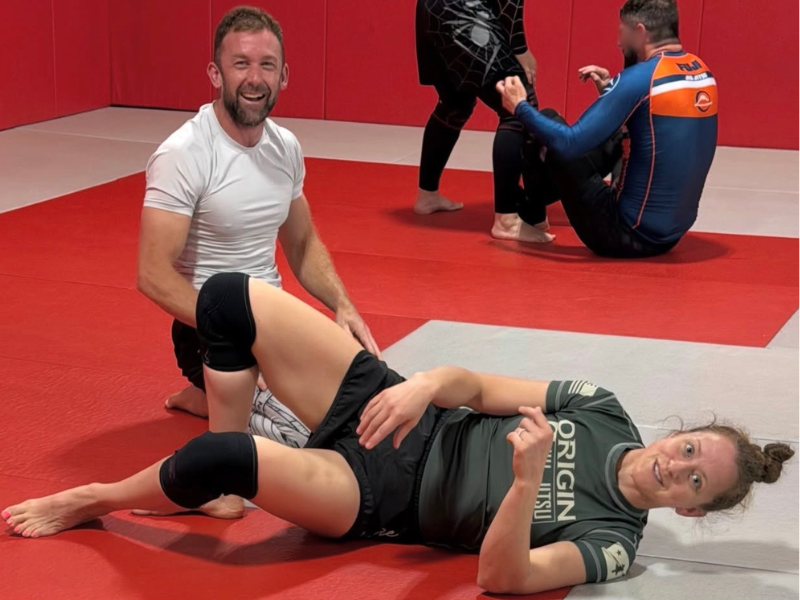
Gina and Levi Wertz, co-owners of Lost in Float, training over 40 in Lincoln NE
Four years on the mats as a family — how we stay in the game past 40 at Lost in Float in Lincoln NE.

And we've had our share. Levi took a knee injury bad enough that he was told he'd likely need surgery — and he rehabbed it without going under the knife. He's come back from a spinal disc replacement. Add in the ongoing back, shoulder, and everything-else that stacks up over years of hard training. Mine have been shoulders, an elbow, an ankle — the usual toll of weightlifting and jiu-jitsu when you refuse to slow down. Four years later, we're both still lifting and still rolling, and we're convinced the reason is what we do between the hard days.

Here's what that's actually looked like for us — not claims, just our experience. When Levi was rehabbing that knee, the combination of Fire & Ice (Sauna + Cold Plunge) and red light was a genuine turning point in how he moved and how fast he bounced back day to day. HBOT has been the biggest surprise of all: his energy, his sleep, and his recovery time between sessions have all improved in ways we didn't expect, and it's become the thing he won't skip. Regular float sessions to pull stress out of the system have been a game-changer on their own — a beat-up spine getting an hour under zero load, and a nervous system that finally gets to reset. We can't promise you any of these outcomes — bodies are individual and results vary — but this is our honest, lived experience, and it's exactly why we built the place around these tools.

That's the honest case for building a real recovery practice instead of collecting individual sessions here and there. We built the place we needed for our own family. If you're over 40 and still competing, still lifting, still showing up — you already understand exactly what we mean.

The Membership Math for Athletes

Athletes who build a genuine recovery practice typically use 3–5 services per week. A Lost in Float membership includes free sauna 2x/day, free daily Tonal strength training, after-hours access 4am–midnight, shareable credits for float, Fire & Ice (Sauna + Cold Plunge), the Immersion Room, red light, and cryo (HBOT credits on Gold & Platinum; all members get 50% off full-price HBOT), and 50% off every additional full-price service. For someone floating 2–3x per month and using sauna 3–4x per week, a membership pays for itself within the first few sessions.

The extended member hours are particularly relevant for athletes whose training schedules don't fit neatly into standard hours. Early morning sauna before practice, a late Tonal session after training — the extended access makes the plan actually executable around a competitive schedule. (After-hours access covers sauna, Tonal, and the locker room; Fire & Ice, float, red light, and HBOT run during regular hours, Tue–Sun until 9pm.)

Train hard. Recover harder.

Eight services under one roof — float, sauna, red light, cryo, HBOT, Tonal, and Fire & Ice (Sauna + Cold Plunge).

Book a session → See memberships
GW
About the Author
Gina Wertz
PharmD · INHC · CYT+ · TRS-S · TRS-C

Gina Wertz is co-owner of Lost in Float in Lincoln — the wellness center she and her husband Levi have been building since 2017. She's a pharmacist by training (PharmD, Creighton University, Omaha), an Integrative Nutrition Health Coach (INHC), Certified Yoga Teacher (CYT+), and a Movement & Mobility Specialist and Coach through Dr. Kelly Starrett's The Ready State (TRS-S, TRS-C). Between running the studio and raising two kiddos, she's constantly digging into what the research actually shows about health, movement, and how our bodies work — because staying active, curious, and feeling good in the years ahead is a project worth doing well. Everything she writes reflects that: honest science, real limits, and the belief that we're all still learning.

Lost in Float · Lincoln, NE · Athletes

Recover like it's your job.

Eight services under one roof — float, sauna, red light, HBOT, Tonal, Fire & Ice (Sauna + Cold Plunge). Membership includes after-hours access built around training schedules.

Book a session → See memberships
Text us Book a session →