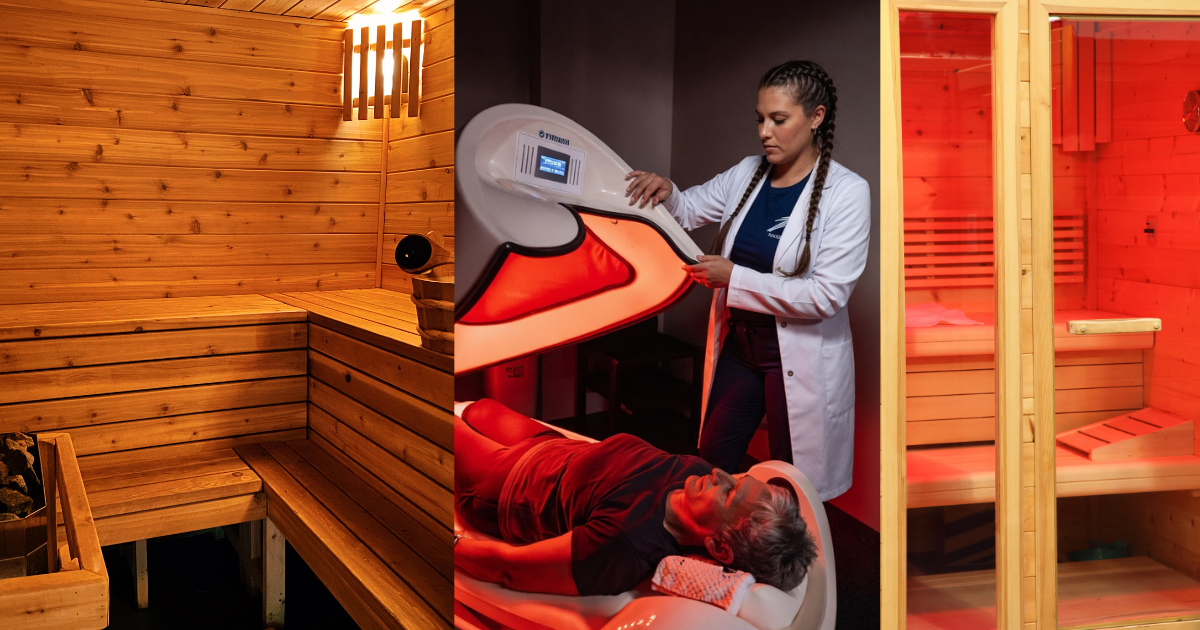
Wellness recovery has gone from a niche corner of the fitness world to one of the fastest-growing categories in healthcare. In Lincoln, Nebraska specifically, 2026 has brought a wave of new options — float tanks, saunas, cold plunges, red light beds, hyperbaric oxygen, cryotherapy. That's good news. More options means more people get exposure to modalities that, in many cases, have decades of peer-reviewed research behind them.
It also means a lot more information to sort through, much of it written by marketers rather than scientists. So this guide is the version we wish existed when we opened in 2017: a complete, research-led walkthrough of what each of the major recovery modalities actually does, what the studies show, what to look for in a well-run center, and how to think about putting them together into something that works for you.
This is meant to be useful whether you book with us or not. The evidence behind these tools is solid enough that picking the right ones for your goals matters more than picking the right address.
What "Wellness Recovery" Actually Means
The term itself is squishy. Walk into a "wellness center" today and the menu might list twenty, fifty, even a hundred-plus "therapies" — everything from float tanks and traditional saunas to infrared cocoons, vibration plates, fat-freezing devices, cellulite rollers, "muscle mapping" scans, and sound-vibration beds. Some of it is backed by decades of peer-reviewed research. Some of it is promising but early. And some of it is marketing built on a single small study or a mechanism that sounds scientific but hasn't held up. From the outside, it all gets described in the same confident language — which is exactly the problem.
The modalities that have built up the strongest evidence base — and that we'd consider the foundation of a serious recovery practice — share a few things in common. They produce a measurable physiological response (cortisol drop, heat shock proteins, growth hormone release, mitochondrial signaling). They've been studied in peer-reviewed journals across multiple decades. And they work through mechanisms that researchers have actually characterized at a cellular level.
A simple way to sort any modality you come across, whatever menu it's on:
Strong evidence — studied in large or repeated peer-reviewed trials across years, with a mechanism researchers have actually characterized. Traditional sauna, cold water immersion, resistance training, and float therapy sit here.
Emerging — a plausible mechanism and encouraging early data, but the research is still thin or short-term. Wellness-pressure HBOT, red light therapy, and PEMF fall in this band. Real, but worth asking specific questions about — the details of how it's delivered matter a lot.
Marketing-forward — heavy on dramatic before-and-after promises (spot fat reduction, cellulite "melting," anti-aging guarantees), light on independent replication. A lot of aesthetic body-contouring devices live here. Not necessarily useless, but rarely the reason to choose a center.
Be cautious of any facility that promises to treat specific medical conditions, or guarantees results in a set number of days. Wellness centers aren't medical providers, and "treats 50+ conditions" or "results in 90 days" is a marketing posture, not a clinical one. The modalities in this guide can genuinely support how you feel, recover, and age — but "support" and "treat" are different words for a reason, and a center that blurs them is telling you something about how it operates.
That short list, plus the strength training piece most centers leave out, is what we built around at Lost in Float. Eight services under one roof, most in private suites. We'd genuinely rather operate eight things at a level we're proud of than thirty things spread across the same staff and floor space.
Sensory-reduced, zero-gravity nervous system recovery in 1,300 lbs of Epsom salt
Heat exposure backed by 20+ years of Finnish longevity research
45°F cold water immersion, booked inside Fire & Ice or the Immersion Room
A private room with a hot plunge and cold plunge for alternating heat and cold
Photobiomodulation for cellular ATP production, skin, and recovery
3-minute nitrogen-cooled exposure that may support inflammation recovery and an endorphin lift
Pressurized oxygen by mask for enhanced oxygen availability
AI-adaptive resistance — because recovery without strength is half the equation
Below, we walk through the science behind each one, what the research actually shows, and what to look for in any center offering it. If you're choosing between several options in Lincoln (or anywhere), the specifics in each section are what to ask about.
Traditional Sauna: The Most-Studied Longevity Modality You've Probably Tried
Sauna is one of the rare wellness practices with serious longevity data behind it — including some of the largest, longest-running observational studies ever conducted on a non-pharmaceutical intervention. The basics: sustained dry heat exposure raises core body temperature, drives a cardiovascular response similar to moderate exercise, and triggers a cascade of cellular stress responses (heat shock proteins, growth hormone release) that the body uses to adapt and repair.
What the research shows
The Finnish KIHD cohort study, which followed roughly 2,300 middle-aged men for over 20 years, found that men who used a traditional sauna 4–7 times per week had a 50% lower risk of fatal cardiovascular events and a 40% lower risk of all-cause mortality compared to once-weekly users (Laukkanen et al., JAMA Internal Medicine, 2015). A separate 2017 paper from the same research group documented an inverse association between sauna frequency and dementia/Alzheimer's risk (Laukkanen et al., Age and Ageing, 2017).
The most comprehensive study to date came in 2020: Knekt and colleagues followed nearly 14,000 Finnish men and women for up to 39 years (Knekt et al., Preventive Medicine Reports, 2020). The protective association showed up most strongly in a specific window: sessions in the 176–210°F (80–99°C) range, used 4–7 times per week — up to a 66% lower risk of dementia compared to once-weekly users. The Knekt analysis identified 5–14 minutes per session as the duration band where the association was strongest, though typical sauna practice ranges from 5 to 20 minutes per session, with most people working up to 15–20 minutes once they're acclimated.
The Knekt 2020 paper also documented something worth knowing: people who used saunas above 212°F (100°C) had roughly double the dementia risk in the first 20 years of follow-up compared to those staying below 176°F. The protective effect appears to have a ceiling — above which the association reverses. This is observational data, not a randomized trial, so it shows association rather than proven causation. But the cohort size, follow-up length, and dose-response pattern make it the strongest evidence we currently have on sauna temperature.
The practical takeaway: somewhere between 176°F and 210°F is where the long-term research suggests the benefits cluster. Hotter than that, the data starts pointing the other direction.
Traditional vs infrared
The longevity research above was conducted on traditional Finnish saunas — dry heat in the 175–195°F range. Infrared saunas (including cocoon-style pods) operate at 110–140°F and produce a different kind of session: less ambient heat, more direct radiant warming. They have their own benefits, particularly for relaxation and mild musculoskeletal pain, but they aren't the same intervention the longevity studies looked at. If a center markets "sauna" and what they actually have is an infrared cocoon at 130°F, that's worth knowing before you book — it's not the version the cardiovascular and brain-health research was built on. We wrote a full breakdown of the differences here.
What to look for in any sauna
- Type — traditional Finnish or infrared. The longevity research is on traditional.
- Operating temperature — for the protective range from the Knekt research, you're looking for 176–210°F. Many home and gym saunas — and most infrared units — don't actually reach the lower end of that.
- Frequency you can realistically achieve — most of the research shows the strongest effects at 4–7 sessions per week. A pricing structure that makes weekly use easy matters more than the exact temperature.
Our sauna runs at 195°F — chosen specifically because it sits in the middle of the protective range from the Knekt data, hot enough to drive the cardiovascular response that the studies show benefits, well clear of the threshold above which the association reverses. More on sauna protocol and what to actually do in there.
Cold Plunge: The Catecholamine Response
Cold water immersion — also commonly called cold plunge or ice bath — is one of the most studied recovery interventions of the past decade, partly because the physiological response is so dramatic and so easy to measure. The mechanism, in plain terms: when you submerge in cold water, your body activates a sympathetic nervous system response that releases a cascade of catecholamines — norepinephrine, dopamine, and others — that produce both immediate effects (alertness, mood elevation, pain dampening) and downstream effects (brown fat activation, metabolic shifts, anti-inflammatory signaling).
What the research shows
The benchmark study on cold-induced catecholamine response is Šrámek et al. (2000), which had subjects immersed in 14°C (57°F) water for one hour. The result: plasma norepinephrine increased by 530% and dopamine by 250% — sustained for hours after exit. Even shorter exposures at colder temperatures produce most of the same effect, which is why most cold plunge protocols are 2–5 minutes rather than a full hour.
The cold-shock protein angle is newer but compelling. RBM3 (RNA-binding motif protein 3) is a cold-shock protein that has shown neuroprotective effects in animal models — including the preservation of synaptic connections under conditions that would otherwise drive neurodegeneration. The translation to humans is still being worked out, but the mechanism is plausible and the early human data is consistent. Here's the deeper read on cold shock proteins.
Brown adipose tissue (brown fat) is the other piece. Unlike white fat, which stores energy, brown fat burns it to generate heat. Regular cold exposure has been shown to increase brown fat volume and activity — which has implications for metabolic health, glucose handling, and resting energy expenditure. The effect is modest in absolute terms but consistent across studies.
Water conducts heat away from the body roughly 25 times more efficiently than air at the same temperature. This is why a 45°F plunge feels dramatically different from a 45°F room — and why a few degrees of difference in plunge water changes the response significantly. Below 50°F is generally where the catecholamine response and brown fat activation are most pronounced. Above 55°F starts becoming a "cool dip" rather than a cold plunge, and the response curve flattens.
What to look for in a cold plunge setup
- Actual water temperature — ask for a number. "Cold" can mean anything from 38°F to 60°F.
- Privacy and the room around the plunge — you'll be more relaxed and stay in longer if the room is warm and private. A cold room before a cold plunge means you're already stressed before you get in.
- Shower access in the same space — for warming up after, and for general hygiene before. Worth checking.
- A clock you can see — counterintuitive, but a visible timer makes it dramatically easier to stay in. Without one, your time perception goes haywire and 90 seconds feels like five minutes.
Our cold plunge runs at 45°F and is booked inside a private room — Fire & Ice (Sauna + Cold Plunge) or the Immersion Room (hot plunge + cold plunge) — with a hot shower in the same room and a countdown clock on the wall. More on the cold plunge experience here.
"The sauna is SO CLEAN and actually hot. Much to my surprise, I have also become addicted to cold plunging."
Float Therapy: Removing Inputs to Quiet a Sensitized Nervous System
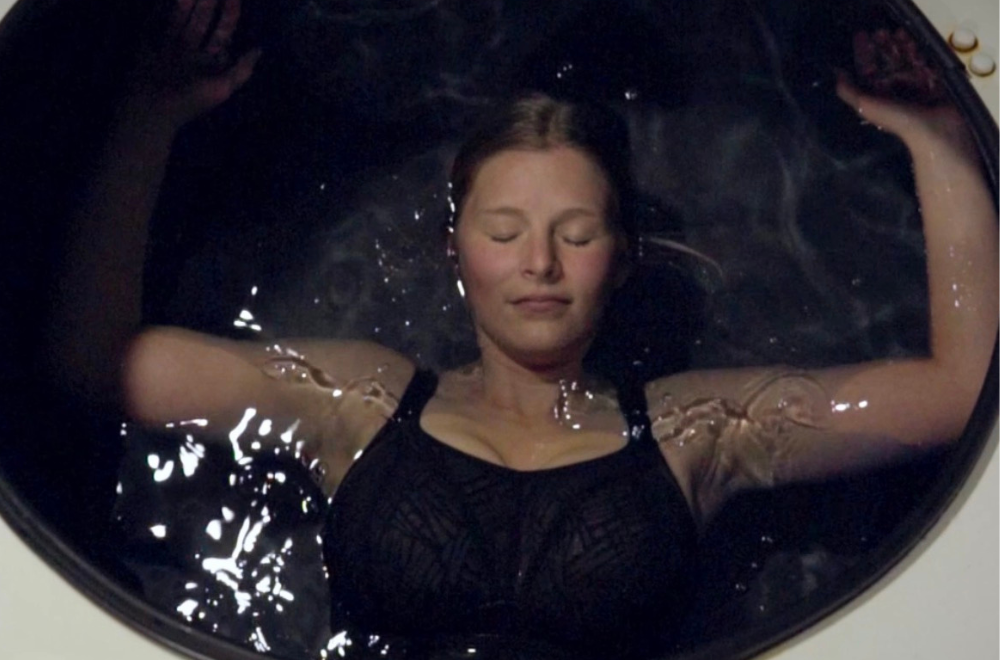
Float therapy — also called sensory deprivation, REST (Restricted Environmental Stimulation Therapy), or flotation-REST in the research literature — works by reducing nearly all sensory input simultaneously. You're suspended in roughly 1,300 pounds of dissolved Epsom salt at exactly skin temperature, in a dark, sound-attenuated tank. Without gravity, light, sound, or temperature differential to process, the nervous system has very little input left to react to.
What the research shows
The most influential modern study comes from the Laureate Institute for Brain Research in Tulsa: Feinstein et al. (2018), PLOS ONE documented significant short-term reductions in anxiety and improvements in mood after a single float session. Participants with anxiety-related diagnoses showed measurable drops in anxiety scores right after floating.
The earlier foundational research came from Kjellgren and colleagues. Their 2001 paper in Pain Research and Management (Kjellgren et al., 2001) found significant reductions in pain, anxiety, and depression in chronic pain patients using float REST — with effects persisting between sessions and accumulating with regular practice.
The most recent and comprehensive review came in 2025: Lashgari et al., BMC Complementary Medicine and Therapies analyzed 63 studies covering 1,838 participants — the largest synthesis of flotation research published. Positive findings were reported across nine categories: pain, athletic performance, physiology (cortisol and blood pressure reduction), stress, anxiety, sleep, consciousness, psychology, and creativity.
What's actually happening in there
The most useful framing comes from neuroscience: chronic stress, anxiety, and central sensitization (the nervous system amplification that drives much of fibromyalgia and other persistent pain syndromes) all involve a nervous system that's running at elevated baseline activation. Float therapy works essentially as input deprivation — by removing nearly every signal the brain would normally process, the autonomic nervous system shifts from sympathetic (fight-or-flight) toward parasympathetic (rest-and-digest) dominance. Here's the deeper read on what's happening in the brain during a float.
The mechanical side matters too. Without gravitational load, the spine lengthens, joint compression releases, and muscle tone decreases passively. For people with back pain, joint pain, or pregnancy-related musculoskeletal load, many guests tell us the absence of gravity for an hour brings noticeable physical relief. More on float therapy for chronic pain conditions.
More than any other modality on this list, float therapy depends on small operational details being right. Water temperature must sit at exactly skin temperature (~93.5°F) so the boundary between body and water disappears — drift even a degree and you start noticing the water again. Salt concentration has to stay in a narrow window or buoyancy feels different. Room humidity has to be calibrated. Sanitation has to happen between every session. Sound dampening has to actually work.
None of those are hard to achieve once. All of them are hard to keep dialed in for years. This is why operational tenure matters more for floating than for almost anything else on this list — and why a center that's been running tanks for a long time tends to produce a different experience than one still learning its equipment.
What to look for in any float center
- Water temperature stability — should sit at skin temperature, around 93.5°F. Ask how often it's checked and how it's calibrated.
- Sanitation protocol — between every session, not daily. About 1,300 lbs of Epsom salt plus our three-stage system: hydrogen peroxide, UV light and filtration.
- Private suites with their own showers — you'll need to shower before and after. A shared shower setup adds friction that erodes the experience.
- Room acoustics and humidity — harder to evaluate as a customer, but ask. Centers that've been running tanks for a while will have an answer.
- How long they've been running tanks — float therapy rewards experience.
"It's a classy spa with friendly and cooperative staff. As one goes deeper into the facility, the decor and light gently become more subtle, and the body begins to release stress and relax. We love Lost in Float and prefer to float here."
Red Light Therapy: Photobiomodulation, Wavelengths, and the Irradiance Question
Red light therapy — technically photobiomodulation (PBM) — uses specific wavelengths of red and near-infrared light to drive cellular responses, primarily in the mitochondria. The mechanism, well-characterized since the 1990s: red and near-infrared photons are absorbed by cytochrome c oxidase (Complex IV in the mitochondrial electron transport chain), which boosts ATP production and triggers downstream cellular repair signals.
Of all the modalities in this guide, red light therapy is the one where equipment quality varies most dramatically. Two consumer devices that look identical from the outside can produce wildly different results, depending on what specs are real and what specs are marketing.
The two specs that matter
Wavelengths. Different wavelengths reach different tissue depths and trigger different cellular responses. The well-studied therapeutic ranges:
- 630–660nm (visible red) — penetrates skin and surface tissue, supports collagen production, skin tone, and superficial healing.
- 810–850nm (near-infrared) — reaches deeper tissue, supports muscle recovery, joint health, and the cellular ATP response.
- 980nm — newer in the research literature, with evidence for water-mediated cellular effects distinct from the cytochrome c oxidase pathway. More on the 850nm vs 980nm distinction.
Irradiance at the skin. Irradiance is the dose of light actually reaching your tissue, measured in mW/cm². The therapeutic range, supported by clinical research, is roughly 20–40 mW/cm² at the skin surface. Below that, the cellular response is muted. Above, the dose-response curve flattens (and in some studies, reverses).
Many devices advertise irradiance numbers that look impressive but are measured at the LED itself rather than at the treatment surface — distances of even a few inches dramatically reduce the actual delivered dose. This means a panel marketed as "200 mW/cm²" may deliver 20 mW/cm² (or less) at the skin. The right question to ask is whether irradiance is verified at the treatment surface using standardized testing, not whether the LED count or the on-paper wattage looks high.
This is an industry-wide measurement issue, not a critique of any specific product. Here's a deeper guide to wavelengths, irradiance, and what verified specs actually look like.
What the research shows
The clinical evidence base for red light therapy spans skin health, muscle recovery, joint pain, hair regrowth, and an emerging body of work on cognitive and metabolic effects. For skin specifically, multiple randomized trials have shown improvements in collagen density, fine lines, and skin tone with consistent use over 8–12 weeks. For muscle recovery, research suggests near-infrared light may reduce post-exercise inflammation and support return to performance. More on red light specifically for skin.
What to look for in a red light setup
- Multi-wavelength coverage — devices with both red (630–660nm) and near-infrared (810nm and above) cover the broadest range of clinical effects.
- Verified irradiance at the treatment surface — the spec that matters, measured the right way.
- Full-body coverage vs targeted panel — for general recovery and skin, full-body beds are more efficient. For targeted issues (a specific joint, a localized skin concern), a panel works fine.
- Session length — research-supported sessions are typically 10–20 minutes for full-body treatment.
Here's where we'll get specific, because this is the modality where specifics matter most. Our full-body bed delivers ten wavelengths, chosen to cover the range of research-supported effects rather than a single band — and each session is targeted to your goal rather than running all ten:
- 415nm & 528nm (blue & green) — surface skin: blue for blemish-prone skin, green for tone and pigmentation.
- 605, 630, 640, 660nm (red) — collagen production, skin tone, and superficial healing.
- 810, 830, 850nm (near-infrared) — deeper tissue: muscle recovery, joint health, and the cellular ATP response.
- 980nm — the water-mediated pathway distinct from the cytochrome c oxidase mechanism.
A single-wavelength device — a 660nm-only bed, for instance — can drive the surface-skin effects but can't reach the deeper-tissue and recovery responses that come from the near-infrared bands. Having the full spectrum available means each session can be targeted to your goal — skin, recovery, or deeper tissue — instead of being locked to one band.
Earlier in this section we said the spec that matters is irradiance verified at the treatment surface, measured with lab-grade equipment rather than at the LED. Here's ours, because we think anyone making the claim should be able to show it.
Our bed was independently tested by LightLab International (report LLIA002809-001), which measured spectral irradiance at 15 separate locations at the height of the bed surface — the level of a person actually lying in it. The result: an average of 36.84 mW/cm² across the bed, ranging from 34.78 to 38.31 — squarely inside the therapeutic 20–40 mW/cm² window, measured where your skin actually is, not at the diodes.
This is exactly the document to ask any center for. If a bed's irradiance is real, they can produce third-party numbers measured at the treatment surface. If the only number available is a big figure printed at the LED, that tells you something too.
A full-body session runs about 15 minutes. The multi-wavelength approach and the verified dose are the two things that separate a bed doing what the research describes from one that mostly looks the part.
"My husband and I both did the red light therapy, and had very similar experiences where we could feel it targeting our pain points — we did not expect that."
Hyperbaric Oxygen Therapy: Pressure and Enhanced Oxygen Availability
HBOT — short for hyperbaric oxygen therapy and sometimes simply called a hyperbaric chamber session — is the modality on this list that most people associate with hospital settings. And for good reason: it's used clinically for decompression sickness, certain wound-healing protocols, and a handful of specific medical conditions. Wellness HBOT uses lower pressures than a hospital's 2.0–3.0 ATA and pairs them with elevated oxygen. The mechanism is the same: pressurized oxygen dissolves more O₂ directly into blood plasma than breathing air at sea level can — enhanced oxygen availability throughout the body.
The one number that defines the service is pressure — measured in ATA (atmospheres absolute). It's the single most useful thing to ask about, and the one most likely to be glossed over on a marketing page. More on why below.
Two specs define an HBOT session, and both are easy to gloss over on a marketing page. The first is pressure — measured in ATA (atmospheres absolute). Wellness HBOT research spans roughly 1.3 to 2.0 ATA, and the higher end of that range is where some of the more interesting cognitive and recovery work sits.
The second is hard-shell vs. soft-shell, and it's directly tied to the first. Soft-shell ("mild") chambers — the inflatable, zip-up kind — are generally limited to about 1.3–1.5 ATA by their materials, structural engineering, and the safety standards they're built to. Hard-shell chambers are constructed and rated to reach the higher pressures, up to 2.0 ATA in a wellness setting. So "we have HBOT" can mean two meaningfully different things depending on the chamber.
The questions to ask anywhere — including here — are simply: what ATA does the chamber run at, and is it hard-shell or soft-shell? A center that answers with a specific number and chamber type understands its own equipment. A vague answer is the tell. We wrote a full breakdown of 1.3 vs 2.0 ATA and what each pressure is actually good for.
What the research shows
The evidence base for wellness-pressure HBOT is newer and smaller than the literature on sauna or floating, but it's growing. A 2022 systematic review in Neuropsychology Review (Marcinkowska et al., 2022) documented improvements in memory, executive function, processing speed, and global cognitive scores across multiple HBOT studies, primarily at 1.5–2.0 ATA. Emerging research is also looking at post-viral fatigue — but wellness HBOT is not a treatment for any condition, so talk to your doctor if that's your reason for asking.
For inflammatory and recovery applications, early studies suggest mild HBOT at 1.3–1.5 ATA may reduce circulating pro-inflammatory cytokines (IL-6, TNF-α) and support post-exercise recovery markers. The full HBOT guide goes deeper into where the research is strongest.
What to look for in an HBOT setup
- Pressure (ATA) and chamber type — ask for both — wellness HBOT research spans 1.3–2.0 ATA. Soft-shell ("mild") chambers are typically limited to about 1.3–1.5 ATA; hard-shell chambers are rated for the higher end of the range. A center that can name its operating pressure and chamber type is one that understands its own equipment.
- Oxygen delivery — mask vs. cannula — this matters more than people realize. A cannula (the small nasal prongs) sits in the nose and lets a lot of room air mix in, so the oxygen concentration you actually breathe is lower. A well-fitted mask delivers a higher, more consistent oxygen percentage, which is the whole point of the session. Ask which one a center uses.
- Seated vs lying-flat chamber, and comfort — both produce the same physiological effect, but comfort is what determines whether people finish 60-minute sessions and complete their protocols. HBOT effects build cumulatively over multiple sessions; a chamber people skip out of doesn't deliver the research-supported benefits. Temperature control, something to watch, and being able to manage your own session all matter here.
- Contraindications screening — a center that doesn't ask about ear/sinus issues, pneumothorax history, recent surgeries, or seizure disorders before booking is one to be cautious about.
Here's ours, spec for spec. Our HBOT is a hard-shell chamber that runs at four pressure settings — 1.3, 1.6, 1.8, and 2.0 ATA — so the session can be matched to the goal, all the way up to the 2.0 ATA that soft-shell chambers aren't built to reach. Oxygen is delivered by mask at 95–97% concentration, not a cannula, which means you're actually breathing the high-oxygen air the research depends on rather than a diluted version of it. And because comfort is what gets people through full protocols, the chamber is air-conditioned, has a TV, and leaves you in complete control of your session throughout. Pressure, oxygen concentration, delivery method, and comfort — the four things that actually determine whether an HBOT session does what the studies describe. Sessions are 60 minutes, $85, and every member gets 50% off full-price HBOT (Gold and Platinum can also use credits).
Whole Body Cryotherapy: Three Minutes, Different Mechanism
Cryotherapy and cold plunge are often grouped together, but they're not the same intervention. Cryotherapy uses nitrogen-cooled air at -220°F to -240°F, for sessions of about 3 minutes. The skin temperature drops fast, but the cold doesn't penetrate deeply — most of the response is a vasoconstriction-and-rebound effect at the skin and superficial tissue level, plus a strong sympathetic nervous system response.
The research base is real but smaller than for cold water immersion. Cryotherapy has documented anti-inflammatory effects, an endorphin response that produces post-session mood elevation, and emerging research on athletic recovery. The key thing to understand: cryo and cold plunge produce overlapping but distinct effects. Cold water's higher conductivity drives a deeper and more sustained physiological response; cryo's air-based exposure is faster, more intense at the skin, and easier to fit into a tight schedule.
For most people, they're not a substitute for each other — they're complementary. If you have access to both, the cold plunge is generally the better choice for catecholamine response and brown fat activation, while cryo works well as a faster recovery intervention or when you want the response without the full immersion.
Contrast Therapy: Fire & Ice and the Immersion Room
Contrast therapy is the practice of alternating between hot and cold exposure in sequence — typically a few minutes in a hot sauna, then a few minutes in a cold plunge, repeated 2–4 times. At Lost in Float you can do it two ways: Fire & Ice (Sauna + Cold Plunge), one private room with both (45 min $49 / 60 min $59, +$25 to bring a friend), or the Immersion Room, a private hot plunge + cold plunge (20 min $25 / 45 min $49). The mechanism that makes it more than the sum of its parts: the rapid alternation between vasodilation (heat) and vasoconstriction (cold) drives a "pump" through the vascular and lymphatic systems that doesn't happen with either modality alone.
For people coming back from training, surgery, or injury, this matters. The vascular pump effect may support lymphatic drainage, which may help clear inflammatory byproducts that accumulate in tissue post-stress. Anecdotally and in some research literature, contrast therapy may produce faster reductions in subjective soreness than either heat or cold alone — though the rigorous head-to-head data is still developing.
The other thing about contrast therapy: it's psychologically distinct. The pattern of stepping out of intense heat into intense cold and back is a kind of voluntary stress exposure that, done consistently, appears to recalibrate stress tolerance more broadly. The full Fire & Ice guide goes deeper into protocol and rationale.
"This place is top notch, always extremely clean, the staff is incredibly nice and helpful. I love the fire and ice combo — as a professional athlete this has improved my recovery immensely."
The Piece Most Recovery Centers Skip: Strength Training
Recovery only matters if you're producing the kind of training stimulus that demands recovery. For most people pursuing serious wellness outcomes — body composition, longevity, functional strength, metabolic health — resistance training is the foundation, and the recovery modalities sit on top of it. A wellness routine that's all sauna and cold plunge but no strength training is leaving most of the benefit on the table.
The research on resistance training for healthy aging is now overwhelming. Independent of any other intervention, regular resistance training is associated with reduced all-cause mortality, preserved muscle mass into late life, improved insulin sensitivity, better bone density, and reduced risk of falls and fractures in older adults. There is no supplement, modality, or intervention that approaches the effect size of consistent resistance training on long-term function.
This is why Tonal strength training is free daily with every membership at Lost in Float, in its own private suite. Tonal is a wall-mounted AI-adaptive resistance system — it adjusts the load to match your output across sets, builds programs around your goals, and produces a precision strength session in 25–35 minutes. More on how strength fits into the broader recovery stack.
How to Actually Use These Together
The modalities above all have research behind them, but they don't all need to happen in the same session — or even the same week. The optimal stacking depends on what you're trying to accomplish.
For fat loss and body composition: Cold plunge → Tonal (strength) → sauna → red light → float. Cold goes before the lift, not after — cold right after a hypertrophy-focused workout may blunt some strength adaptations. Full recovery stack guide here.
For stress, anxiety, and sleep: Float therapy 1–2× per week as the foundation. Add sauna in the evening for sleep onset (the post-sauna body temperature drop signals sleep readiness). More on the stress and sleep angle.
For longevity and general healthspan: Sauna 4× per week (the dose the longevity research is built on), strength training 2–3× per week, plus whichever recovery modalities you enjoy enough to do consistently. Consistency matters more than the specific stack.
For chronic pain or fibromyalgia: Many guests start with float therapy 2–4× per month, and some add red light, Fire & Ice, or the Immersion Room if joint discomfort is part of the picture. The research here is still emerging, so talk to your doctor about how these fit alongside your care. Full chronic pain guide here.
For burnout and busy professionals: The single highest-leverage session is float + sauna in the evening, 1× per week. More on the 60-minute reset.
How to Evaluate Any Wellness Center (In Lincoln or Anywhere)
Equipment specs and protocols are easier to evaluate from the outside than operational quality is. As more wellness centers open across Nebraska, a few questions tend to surface the difference between a well-run center and one that's just stocked:
- How long have they been running this specific service, and is the equipment top-of-the-line or just one of many? Equipment is easy to buy — but a top-of-the-line red light bed, a custom-built traditional sauna that's deep-cleaned frequently between sessions, a top-of-the-line HBOT chamber, or a precision-maintained float tank looks very different from a budget version that's been added to round out a service menu. Ask whether the equipment is the version the research is built on, and how long the team has been running it. The operational knowledge to keep float water at exactly the right temperature, a sauna calibrated to the protective temperature range and consistently clean, or irradiance on a red light bed verified correctly at the skin surface is built up over years.
- Are the rooms actually private, or partitioned? "Private" can mean very different things from one center to the next. A curtained-off area or a shared changing room is not the same experience as a fully enclosed suite with its own shower and everything you need for the service inside the same room. For float and cold plunge especially — both of which involve undressing, showering, the service itself, and showering again — a fully self-contained suite is the difference between a relaxing experience and a logistical one.
- Can they give you specifics? The exact sauna temperature (not a range — a number) and whether it's traditional or infrared. The exact cold plunge temperature. The wavelengths and verified irradiance of the red light bed — ideally a third-party lab report measured at the treatment surface, not a big number printed at the LED. The HBOT chamber's pressure range (ATA), whether it's hard-shell or soft-shell, and whether oxygen comes by mask or cannula. A center that can answer these directly — better yet, hand you the documentation — is generally one that pays attention to the details that actually drive results.
- Are services run as core offerings or as add-ons to a longer menu? Every service needs operational attention. A center built around a smaller number of well-chosen services can dial each one in further — equipment, maintenance protocols, fewer compromises. Both models exist; ask how each service is staffed and maintained.
- What's included in the membership vs. what costs extra? Most of the modalities in this guide work best with frequency — sauna 4× per week, float 2–4× per month, cold plunge 2–3× per week. A membership that includes daily access to your highest-frequency services (typically sauna and strength training) without per-session add-on fees is doing math that aligns with the research. But frequency only pays off if each session is worth doing — an all-access pass to equipment that isn't dialed in is all-access to a muted version of the benefit. Volume and quality are different things, and the research rewards both together.
None of these are gotcha questions. They're the same questions we'd ask if we were evaluating a center for ourselves.
Why We Only Offer Eight Services
The new wellness centers opening across the country tend to offer a long, attractive list — float, sauna, cold plunge, red light, cryo, HBOT, IV drips, lymphatic drainage, halotherapy, vibration plates, compression boots, hydrogen water, ozone, vitamin shots, biofeedback, and a dozen other things. From the outside, more services can look like more value.
In practice, it depends on whether the center can actually run all of them well. Every service is something a staff has to operate — buy the equipment, train on it, maintain it, sanitize it, calibrate it, and learn what it feels like when something is slightly off. Eight services is already a lot. A very long menu run by the same team in the same building makes it harder to maintain a consistent standard across all of them.
We picked our eight on a simple rule: every service has to be backed by real research, run on equipment we believe in, and worth the time it takes to do it right. Float. Traditional sauna. Cold plunge. Hot plunge (in the Immersion Room). Red light. Cryo. HBOT. Tonal. We've held off on services we weren't sure we could run at a high standard, even when they're trending.
"There's a difference between a place that offers wellness services and one that's built around them."
"I've been coming for years, floating first, and now also sauna/cold plunging. They are always improving the experience and the facilities. It's my happy place to go to relax and reset my soul!"
A 4.9-star rating across 143 Google reviews, members who drive three to four hours past other options to float here, and a steady year-over-year growth in returning customers. None of it manufactured — it's what tends to happen when a center commits to a small number of services and runs them well over a long period.
Come see the difference yourself.
Eight services under one roof, most in private suites. Family-owned since 2017.
Book a session → See membershipsThe Eight Services at Lost in Float
To put a bow on this guide, here's the spec sheet for each of our services. These are the answers to the questions in the previous section, applied to ourselves:
- Float therapy — Two private suites, water held at skin temperature (~93.5°F), 1,300 lbs of pharmaceutical-grade Epsom salt per tank, full sanitation cycle between every session. Running since 2017.
- Traditional sauna — 195°F, dry heat — the kind the longevity research was actually built on, in the protective range from the Knekt 2020 study. A true traditional sauna, not an infrared cocoon or pod running at half the temperature.
- Cold plunge — 45°F, booked inside Fire & Ice or the Immersion Room (single cold plunge sessions aren't sold separately), with a visible countdown clock.
- Hot plunge (Immersion Room) — a private room with a hot plunge and a 45°F cold plunge. 20 min $25 / 45 min $49.
- Red light therapy — Full-body bed, 10 wavelengths (415–980nm) targeted to your goal each session, irradiance independently verified at the bed surface by LightLab International (avg 36.84 mW/cm²). ~15-minute sessions.
- Whole body cryotherapy — Nitrogen-cooled chamber, 3-minute sessions.
- Hyperbaric oxygen (HBOT) — Hard-shell chamber, four pressure settings (1.3 / 1.6 / 1.8 / 2.0 ATA). Oxygen by mask at 95–97%. Air-conditioned, TV, and you stay in control of your session.
- Tonal — AI-adaptive resistance training in a private suite. Free daily with every membership, alongside free sauna 2x/day.
Eight services under one roof — plus Fire & Ice (Sauna + Cold Plunge), one private room with both (45 min $49 / 60 min $59, +$25 for a friend). Each one we'd recommend to our own family.
Frequently Asked Questions
The Bottom Line
The modalities in this guide aren't trends. They're well-studied, mechanistically understood interventions with decades of research behind most of them. Whether you book with us or with someone else, the most important thing is that you actually use them — consistently, in combinations that fit your goals, in a setting that's run with enough attention to detail that the equipment is doing what the research describes.
Lincoln has more options now than it's ever had. That's good for the city, and good for the people who'll get exposure to recovery practices with real research behind them. The questions in this guide are meant to help you pick the option that's a good fit — wherever that turns out to be.
If you're starting from scratch and want a recommendation: traditional sauna, 4× per week, is the highest-leverage entry point. Add resistance training, then layer in cold plunge, float, and the others as they become useful for your specific goals. Most of the benefit is in the consistency.
Lost in Float | 8244 Northern Lights Dr, Lincoln NE | 531.289.7739 | Open Tuesday–Sunday 9am–9pm